
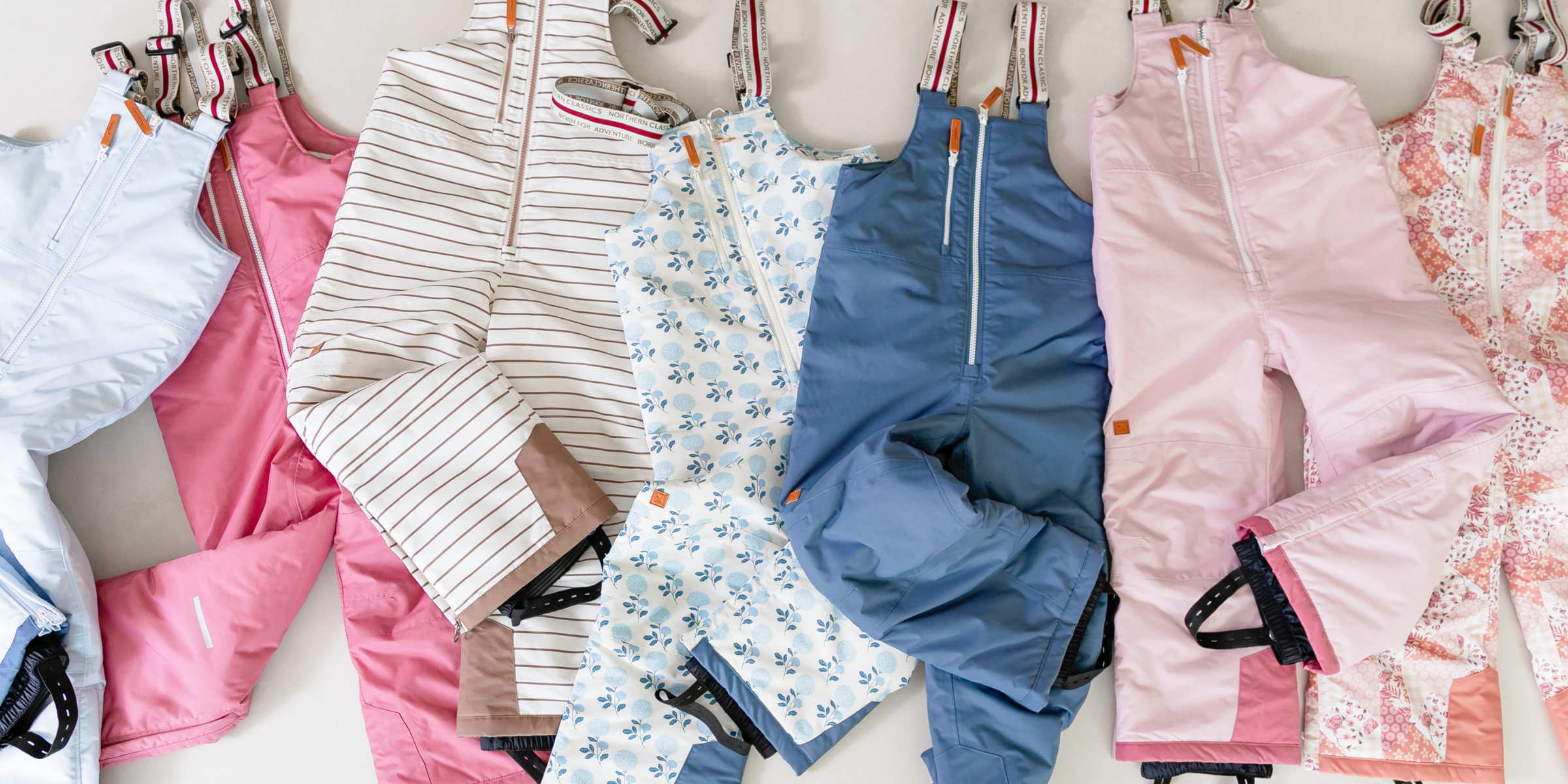
What Waterproof Rating Do Kids Really Need? A Parent’s Guide
If you have ever looked at technical outerwear descriptions, you have probably seen waterproof ratings listed in numbers that can feel hard to interpret. Parents are told to compare performance, but very few product pages explain what those numbers actually mean in day-to-day life. As a result, many families are left guessing whether a coat or pair of snow pants is truly built for the winter conditions their child faces.
That uncertainty is understandable. Most parents are not trying to become experts in technical fabric standards. They simply want to know whether the gear will keep their child dry at recess, on the sled hill, during ski lessons, or through a slushy walk to school.
The good news is that you do not need to memorize every detail to shop wisely. What you do need is a practical understanding of what waterproof ratings are meant to signal and how they connect to the way your child actually spends time outside.
What is a waterproof rating?
A waterproof rating is a way of measuring how well a fabric resists water under pressure. In simple terms, it gives parents a sense of how much moisture exposure a piece of outerwear is designed to handle. The higher the rating, the more water resistance the fabric is generally built to provide.
More specifically, a rating like 15,000 mm (often written as 15K) means the fabric can withstand the pressure of a 15,000-millimeter column of water before moisture begins to seep through. In real life, that translates to strong protection for kids who are sitting in snow, playing in slush, or staying outside for extended periods - conditions where lighter-rated fabrics can start to feel damp.
A child standing outside for a short school drop-off does not need the same level of protection as a child kneeling in snow, riding chairlifts, sledding for hours, or sitting in slush during recess.
Why kids often need better protection than expected
Children are not gentle with winter weather. They do not avoid puddles. They do not carefully brush snow off before sitting down. They rarely stand still for long. Instead, they run, climb, fall, roll, and throw themselves fully into the season.
That means winter gear for kids often faces more moisture exposure than adult outerwear. Even a child who is not skiing may still spend part of the day sitting in snow at recess, dragging sleeves through slush, or leaning against wet surfaces.
Because of that, many parents benefit from choosing stronger weather protection than they initially think they need.
What matters more than the number alone
A waterproof rating can be useful, but it is not the only thing that determines performance. Construction matters too. Seams, closures, coatings, fit, and fabric durability all affect how well outerwear actually works when a child is outside for hours.
This is why parents should not look at waterproof ratings in isolation. A piece with a good rating but weak design details may not perform as well as outerwear that combines weather protection with thoughtful construction.
The role of snow, slush, and pressure
One reason waterproof ratings matter more in some situations than others is that moisture exposure changes when pressure is involved. A child standing in light snow may not challenge the fabric much. But a child kneeling in wet snow, sitting on a chairlift, sliding down a hill, or leaning against damp ground is putting more pressure on the material.
That pressure can push moisture through weaker fabrics more easily. This is one reason snow pants often need especially dependable weather protection. They deal with direct, repeated contact in a way that many other garments do not.
What parents should prioritize for everyday winter use
For everyday winter life, many families need outerwear that handles a wide range of situations rather than one narrowly defined use case. School days can include car rides, recess, slushy sidewalks, and after-school play. Weekend outings may include sledding, neighborhood walks, and unplanned snow adventures.
For that reason, parents are often better off choosing weather-ready gear that can comfortably cover more than they think they need. It is easier to have slightly more protection than to realize halfway through winter that a coat or pair of snow pants is not keeping up.
What about skiing?
If your child skis, snowboards, or spends long stretches in the mountains, weather protection becomes even more important. Mountain weather changes quickly, and skiing usually involves longer outdoor exposure, repeated contact with snow, and periods of sitting or waiting in cold, wet conditions.
Children learning to ski also fall a lot. That alone is a good reason to prioritize dependable moisture protection.
How to think about waterproof ratings in practical terms
Instead of asking what number is best in the abstract, it helps to ask what your child’s winter looks like. Do they mostly move between house and car, or are they outside for long school recesses? Do they play hard in snow? Do they attend winter camp or ski trips? Do you live somewhere with frequent slush?
The more active, wet, and prolonged the exposure, the more valuable stronger waterproof performance becomes.
The best outerwear balances dryness with comfort
Parents sometimes worry that highly protective outerwear will feel heavy, stiff, or overly technical for daily life. But the best kids’ winter gear balances weather protection with comfort. Children still need warmth without too much bulk, movement without restriction, and fabrics that feel suitable for everyday wear.
That balance is especially important because children are more likely to actually wear gear that feels good. Performance matters most when the child is comfortable enough to use the piece the way it was intended.
The bottom line for parents
Most families do not need to become experts in waterproof ratings. They just need enough clarity to avoid underbuying for the season ahead. If your child is exposed to snow, slush, long outdoor days, or winter sports, stronger waterproof protection is usually worthwhile. If you are only dressing for short outings and lighter weather, the need may be different.
The key is to shop for your child’s real winter, not an idealized version of it. When outerwear is chosen with that in mind, children stay drier, outings last longer, and parents spend less time second-guessing whether their gear can handle the weather.


Leave a comment
This site is protected by hCaptcha and the hCaptcha Privacy Policy and Terms of Service apply.